‘Never Too Late’ Readiness Update

Entry # 16

The Great Lakes Singlehanded Society (GLSS) required equipment list is an excellent benchmark in my preparation of Never Too Late. As I mentioned before, GLSS members have a level of experience and knowledge that is enviable. Major races include the GLSS required equipment in their official Notice Of Race. Solo entrees are inspected for compliance prior to entering long distance races including the Trans-Superior International Yacht Race, the Chicago to Mackinaw or the Port Huron to Mackinaw.

Since my last preparation and equipment readiness update, I am adding the following as acquired and/or completed _

  • Uniden MHS126 VHF Marine Radio: This is a hand held unit I purchased that meets GLSS equipment and performance requirements. In addition, the radio floats and will serve as back-up to my VHF radio;
  • Shakespeare Galaxy 5225 (Back-Up) Antennae: Never Too Late currently meets the requirements for a masthead VHF radio antennae. However, a back-up antennae is required as well. Having a back-up antennae is wise in case of de-mast or antennae failure (eg. from a lightning strike). Fortunately, I happened to have kept in the garage this Shakespeare Galaxy Antennae originally from my Dad’s Hunter 34. I successfully attached a VHF connector to the cable and plan to keep this (spare) antennae in the cabin unattached ready to use if needed;
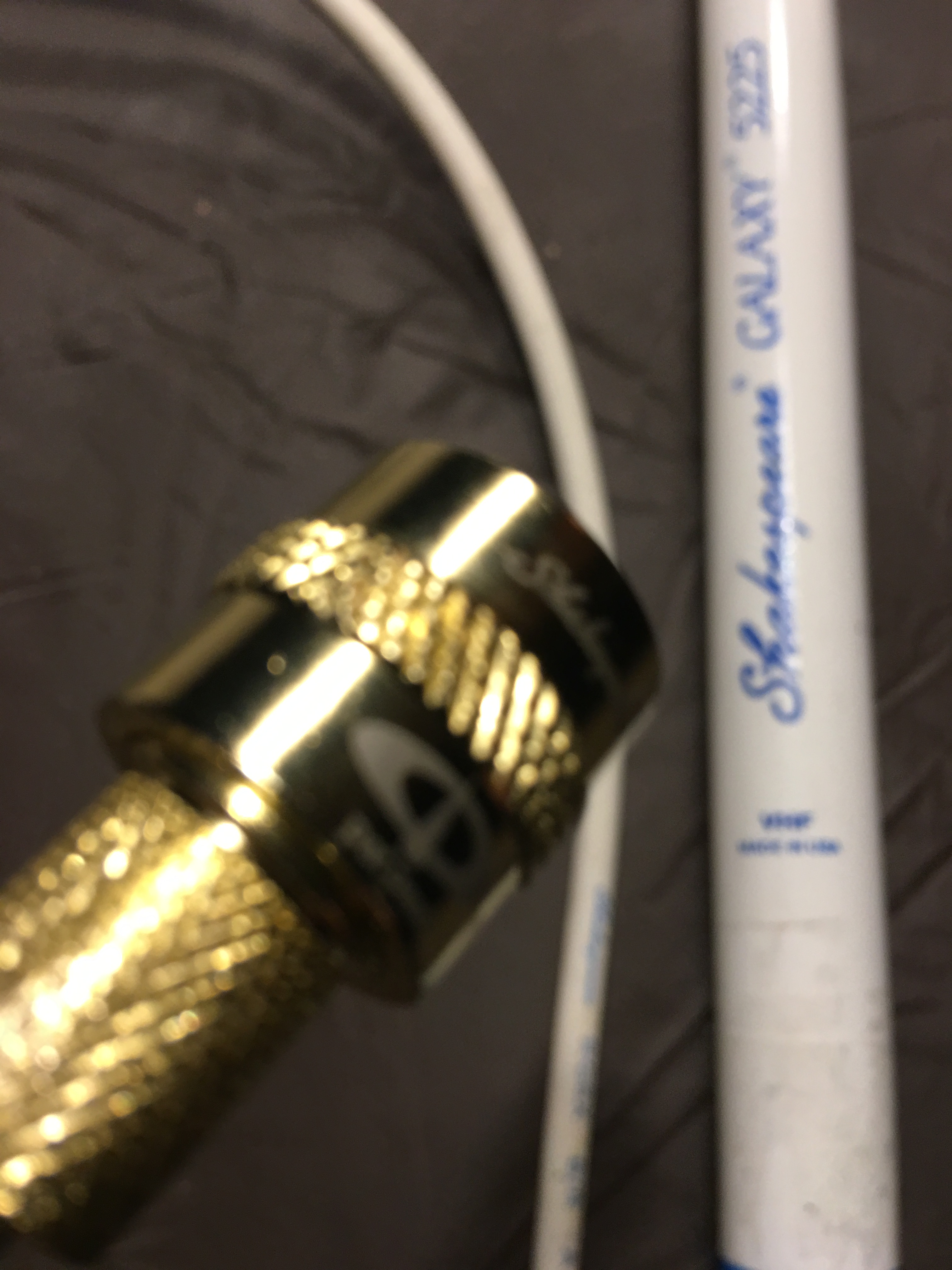
Back-up VHF Antennae with New Connector
  • U.S.C.G.A. Fire Extinguishers (2): I bought two replacing the one fire extinguisher on the boat found to be expired over 20 years ago!
  • Lake Michigan PHRF Rating: One of the entrance boxes to fill out in the 2019 Trans-Superior includes a PRHF rating for your boat. PRHF stands for Performance Handicap Racing Fleet. It is the handicapping system used for yacht racing in North America. It allows dissimilar classes of sailboats to be raced against each other. An individual who is knowledgeable on such matters performs calculations and gives your boat a PHRF rating. Factors calculated include boat length, beam, weight, keel and sail dimensions, etc. I forwarded all the necessary data (I think) and applied for a PHRF rating of my boat with the LMPHRF organization. I would like to thank the LMPHRF organization for their members patience and guidance. (Update) I’ve received advanced word the LMPHRF board has approved assigning Never Too Late a ‘303′ PHRF rating. Translated my sloops’ rated speed is approximately 5 miles per hour. Here I come and come and come – be patient my arrival may take awhile!

Dermatomyositis . . . . . . . . . . . . . . . (My Nephews’ Disease)

Entry # 15

Putting my journey aside for a moment to share Camerons’ story. In my introduction I had mentioned that I would be dedicating this journey to Cameron in an effort to increase awareness of this incurable disease – Dermatomyositis. First, an introduction to his disease _

Dematomyositis is a Rheumatoid disease. It is unclear what triggers the disease. It appears not to be strictly genetic or environmentally caused. Cause may be symbiotic – genetically inclined triggered by environmental circumstances.

Myositis is a type of autoimmune disease in which the body’s immune system starts attacking normal muscle causing damage and inflammation. While muscle inflammation is the primary characteristic of this form of arthritis, myositis can also affect a number of organs such as your skin, stomach, lungs or heart. Myositis belongs to a larger group of diseases called myopathies, which are diseases that affect your muscles.

Dermatomyositis is a type of myositis exhibiting a skin rash. Myositis typically affects the large muscles of the arms and legs, but can also affect muscles associated with swallowing or breathing.

Camerons’ story _ Four years ago, as a junior in high school he had just completed a successful season as starting quarterback with hopes of earning a scholarship to play at the collegiate level. That winter both he and his mom got the flu. Three days later mom was fine but Cameron was not. He was experiencing growing muscle and joint pain. His skin was beginning to rash and blot throughout his body. (Think pig). Finally, his mom (a nurse) took him to the doctor. Different treatments and medications proved ineffective until a steroid treatment seemed to help. However, the disease had taken a toll on Cameron and he was unable to play football his senior year.

So that fall of his senior year Cameron completed applications for college and started a band playing the drums at weddings and miscellaneous gigs. But that winter the disease re-emerged. This time Cameron underwent treatments at Children’s Hospital in Ann Arbor and eventually his disease – for lack of a better description – de-activated. But he no longer could play in his band due to the progressive physical toll on his deteriorating body. Note: With treatment, patients can experience periods of remission, but the disease tends to recur (flare-up).

Over the past four years these flare-ups keep re-emerging. Though he continues to battle, it has taken a toll on his body and overall health. Today, there is little left of my nephews large muscles. Around 190 lbs. just four years ago, Cameron weighed under 120 lbs. when I last visited him. I understand the disease now has migrated to his stomach. As of late, with each flare-up Cameron needs assistance in basic activities we take for granted including: eating, going to the bathroom, showering. I’m in tears at the moment. This damn disease!

I feel helpless and my prayers are not doing enough. This is why I am dedicating this sailing undertaking as a means to help raise awareness. And, if you may be so inclined, I ask you donate to the Arthritis Research Foundation at arthritis.org. And, thank you for following me on this blog.

Course Plotter and Depth Transducer

Entry # 14

Garmin Transducer and Installation: Last summer while under sail, my electronic depth transducer frequently failed. It probably was installed shortly after Never Too Late was launched in 1979 as a new boat. Fortunately, last summer I only sailed her in well marked and familiar waters on Lake St. Clair. Not knowing the depth of the water around you or whether or not there are hidden obstructions lends to high anxiety! Over the winter I ordered a Garmin transducer. It was quite the exercise removing the old transducer. In addition, its through hull location on the starboard side significantly limits the potential size of my planned holding tank. I would have much preferred a location on the port tack side of the hull when under sail as well. But I didn’t want to go through the trouble (time & money) putting another hole in the hull so the new transducer was installed in the same location.

Garmin 942 GPS Chart Plotter: As mentioned, it is always good to know what lies beneath or just ahead of your boat when sailing. And it is particularly critical when sailing in ‘discovery’ waters, near shoals, when skies are overcast or at night. Knowing your depth can also assist in confirming your location and setting a proper course. When I was considering which chart plotter brand and model to purchase several criteria factored into my choice – time, budget, the size of my boat, ease of use and data requirements. The Garmin 942 GPS chart plotter met all my criteria. Installation was also completed last weekend.

Installation: For its size, the PS Flicka is often referred to as an extremely efficient design and a ‘compact’ cruiser with big boat seaworthiness. The cabin interior has a surprising amount of room and sailors have been known to live in their Flicka home!

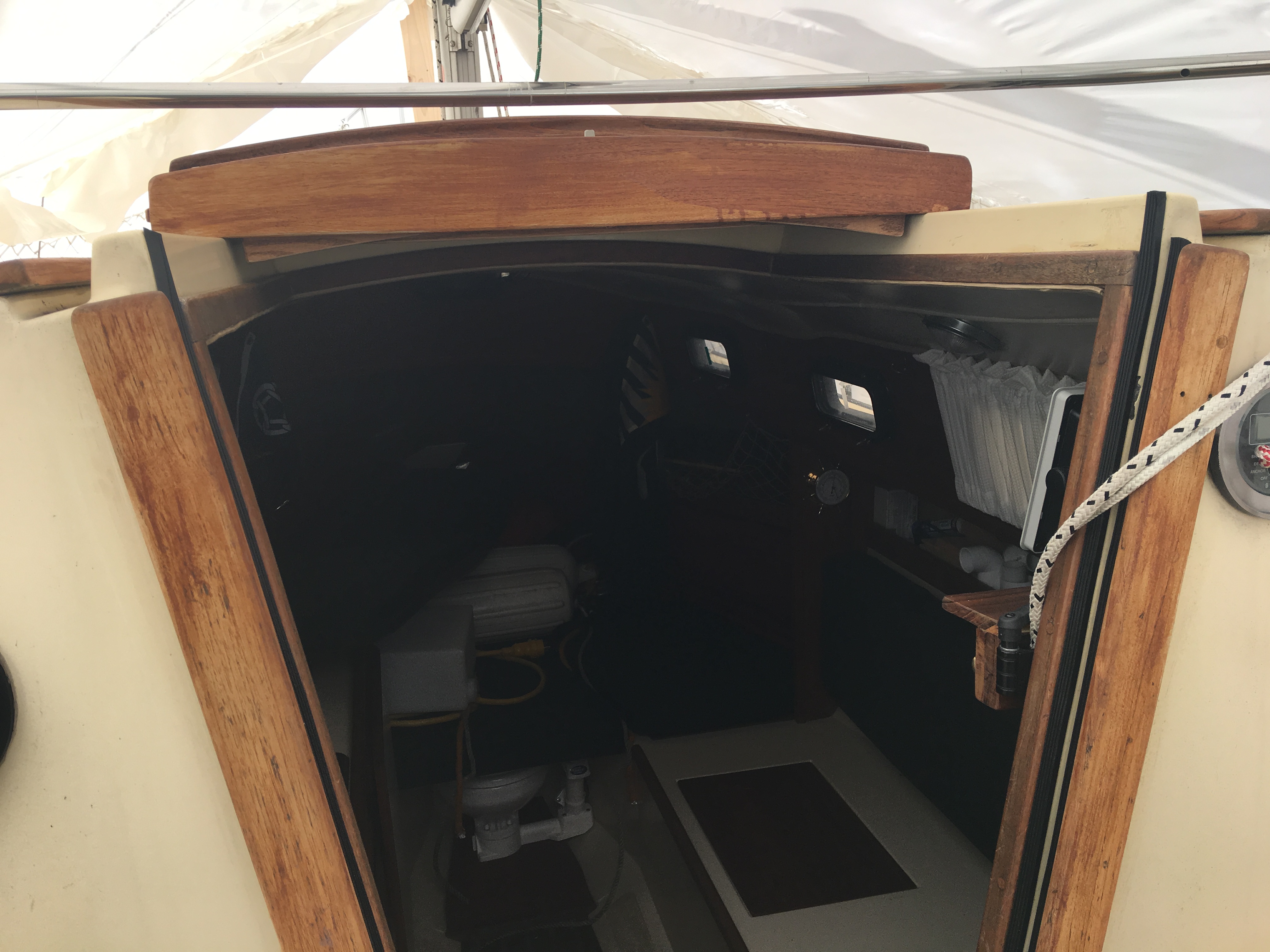
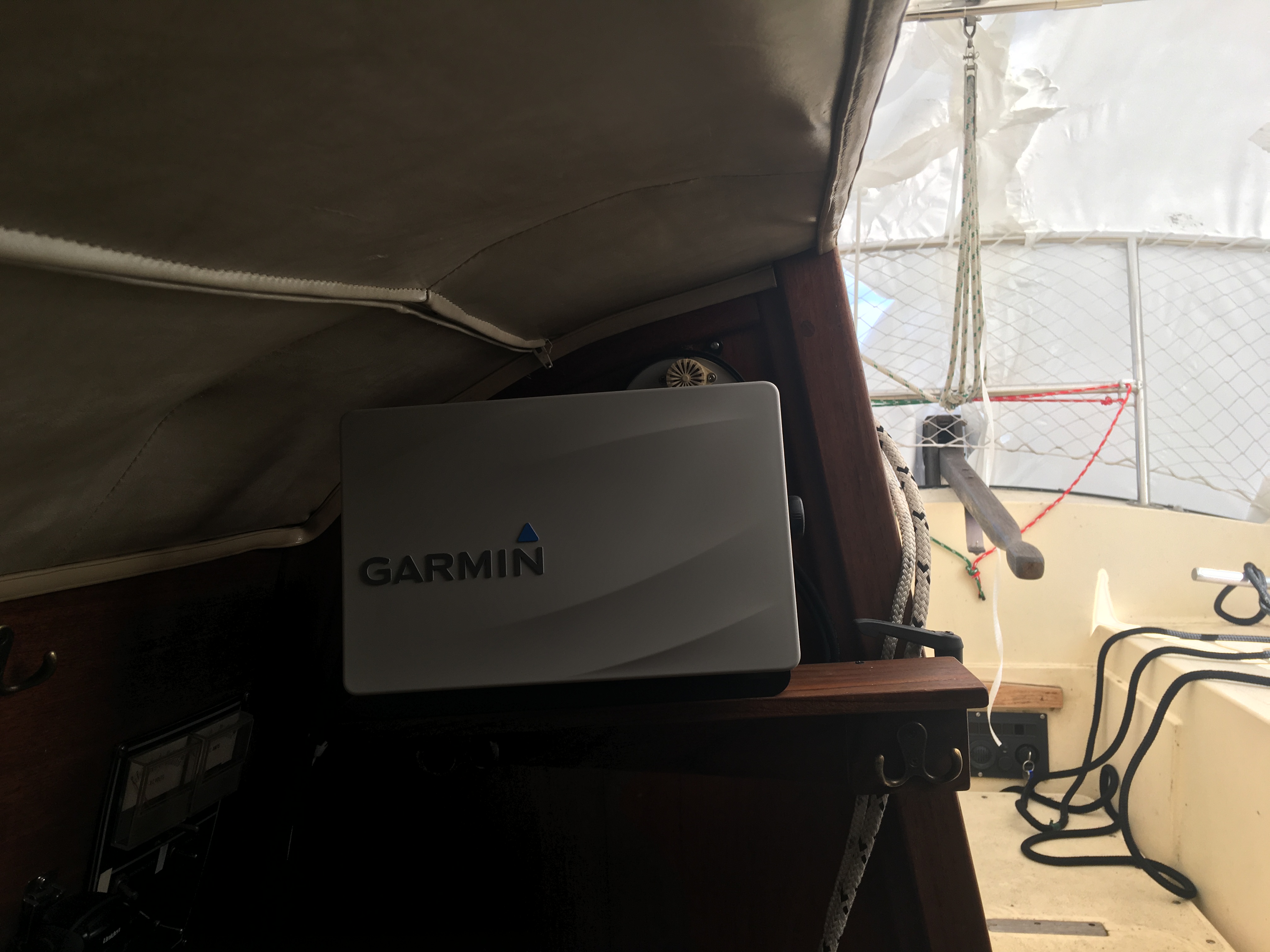
There is only so much room in the cockpit. I had several criteria for the placement of my chart plotter. Firstly, I wanted to easily see the screen and program courses while holding the tiller under sail. Secondly, I wanted to minimize exposure and protect my Garmin from the elements. And lastly, I wanted easy ingress/egress from the cockpit to and from the cabin when sailing with the auto pilot on. With these three criteria, I eventually came up with a solution for all three by locating my Garmin in the cabin entrance and building an articulating platform that can be locked in position. One potential drawback with locating my chart plotter is the inability to ‘fully’ enclose the cabin when in use and underway. (Pictures below)

View From Cockpit of Companionway Opening with Garmin 942 GPS in Stored Position
View From Cockpit of Companionway Opening with Garmin 942 GPS in Sailing Position
View From Inside Cabin of Garmin 942 GPS in Stored Position

I can’t wait to test my new Garmin transducer and GPS chart plotter before my trip. Next a back-up antenna for my VHF radio.

Guinness

Entry # 13

I have three world record applications pending with Guinness _

Application 1: Longest solo sailing distance on freshwater (Great Lakes) achieved in a single season in a sloop with a waterline under six meters.

Application 2: Longest solo sailing distance trip in a season encompassing all five (5) Great Lakes in a sloop with a waterline under twenty feet.

Application 3: Oldest to complete a solo sailing trip encompassing all five (5) Great Lakes in a single season in a sloop with a waterline under twenty feet.

I am expecting determination notifications late April or early May. Should Guinness reject my application(s) , I intend to make the journey regardless.

Note: This applies as well to the 2019 Trans-Superior International Yacht Race should my minimum length exemption request be rejected. ‘Never Too Late’ falls short by two feet the Trans-Superior N.O.R. specified minimum boat length.

Trusted Traveller – NEXUS

Entry # 12

While circumnavigating each of the Great Lakes, I will need to periodically dock for supplies, pump out (and shower) in both the U.S. and Canada. A NEXUS Trusted Traveller pass would allow for Canadian border docking and U.S. re-entry without potential Customs delay(s). However, due to the government shutdown I may have applied for my NEXUS pass too late.

March 14th: All my efforts to date to confirm the status of my NEXUS application thus far has proven to be an effort in futility. Due to the delay in the processing of applications, I may be requested to be interviewed by the government a month into my circumnavigation. That will not be feasible and contingencies are being contemplated.

I’ve contacted my 14th District Congressal Representative Brenda Lawrence for assistance.

‘Never Too Late’ Readiness Update

Entry # 10

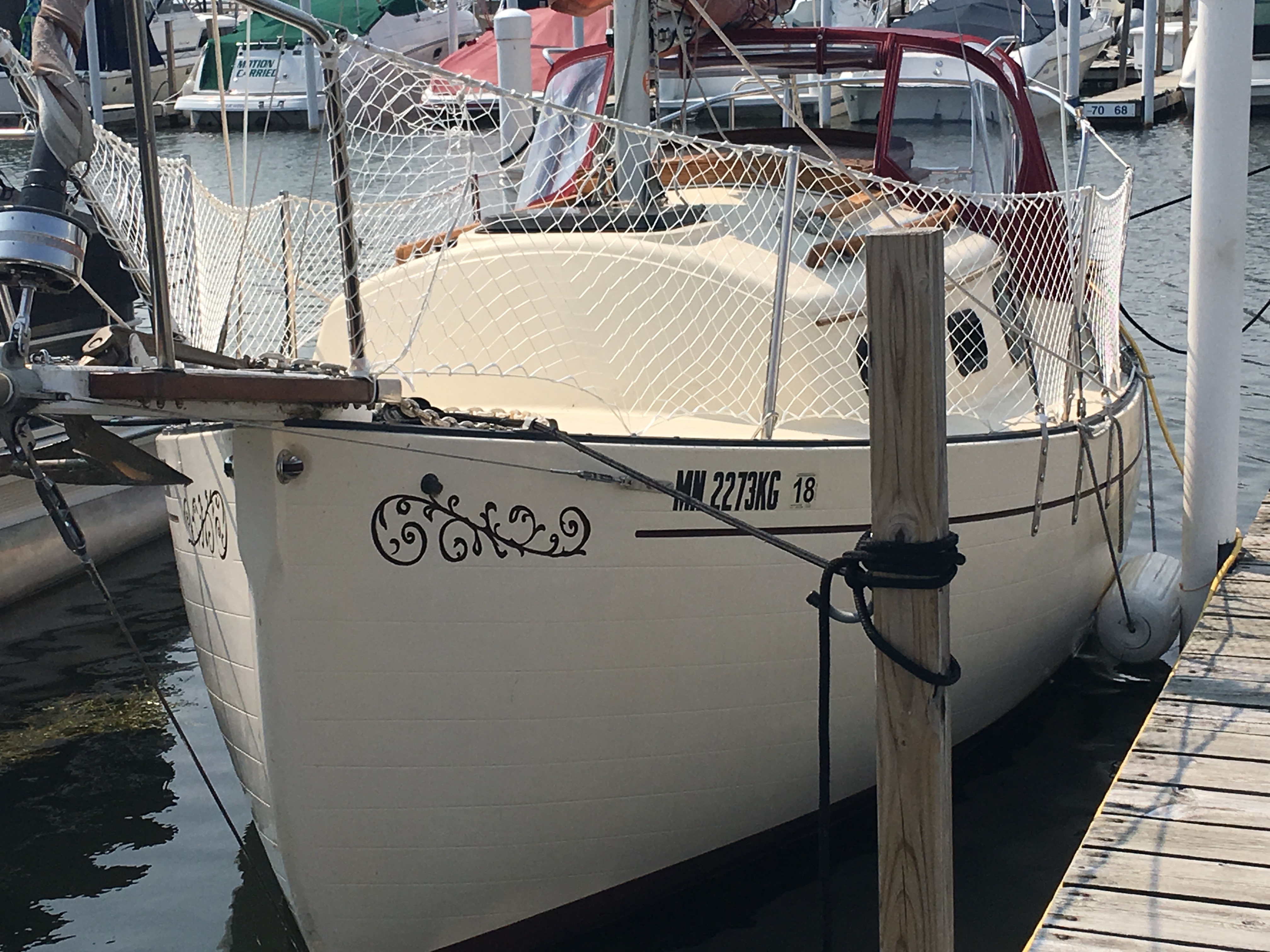
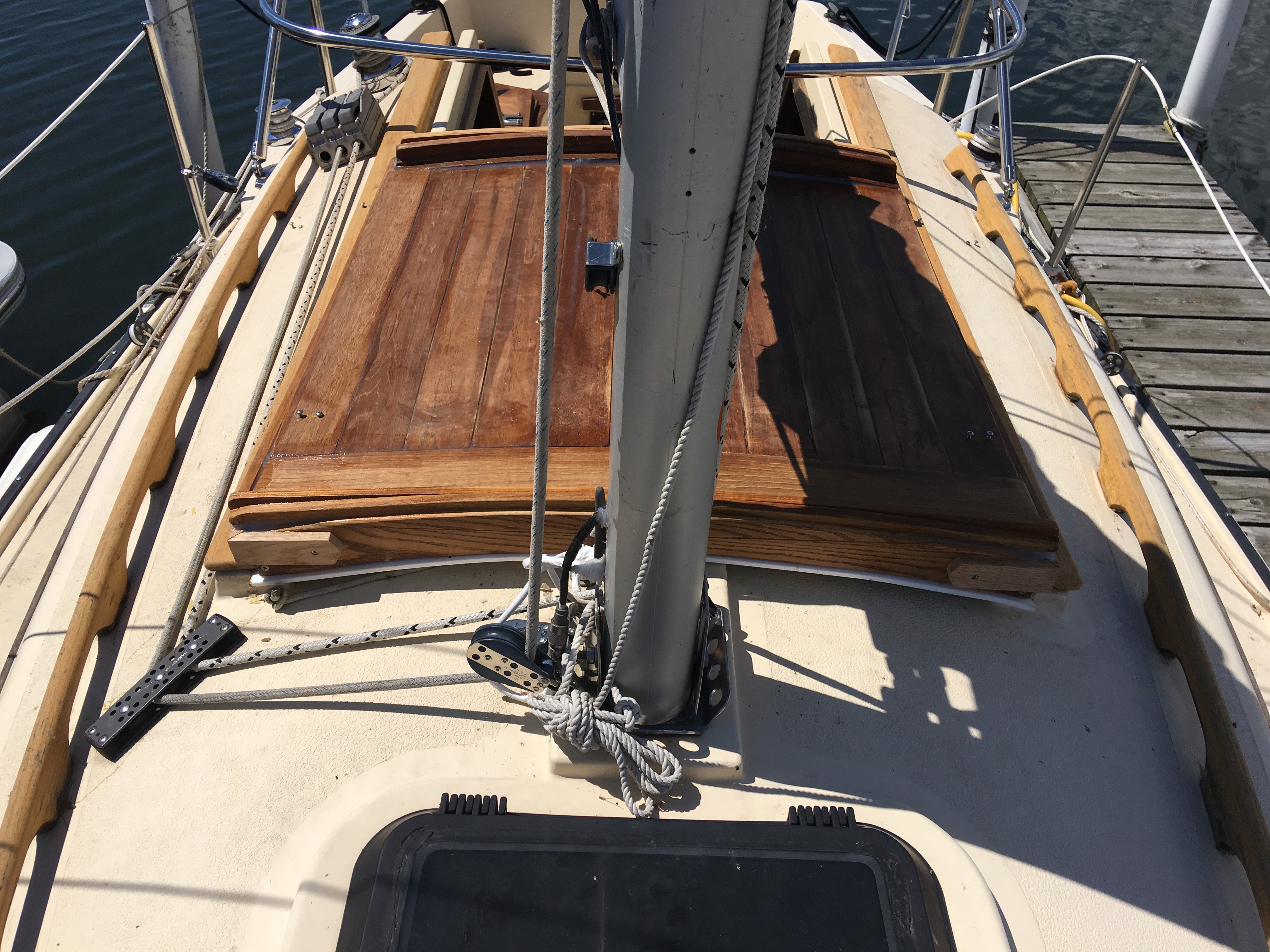
(Below) As you can see in these early fall pictures, ‘Never Too Late’ is equipped with a new hatch, dodger/cockpit splash and deck safety nets.

It took me most of the spring and early summer months of ’18 to design and build the new sliding cabin hatch. Its nice and tight when closed yet with a gentle lift easily slides with the new tephlon strips.

I had the Dodger/Cockpit Splash installed in the summer with a future Bimini in mind. In the fall I completed designing and installing the Bimini myself. (Picture to come).

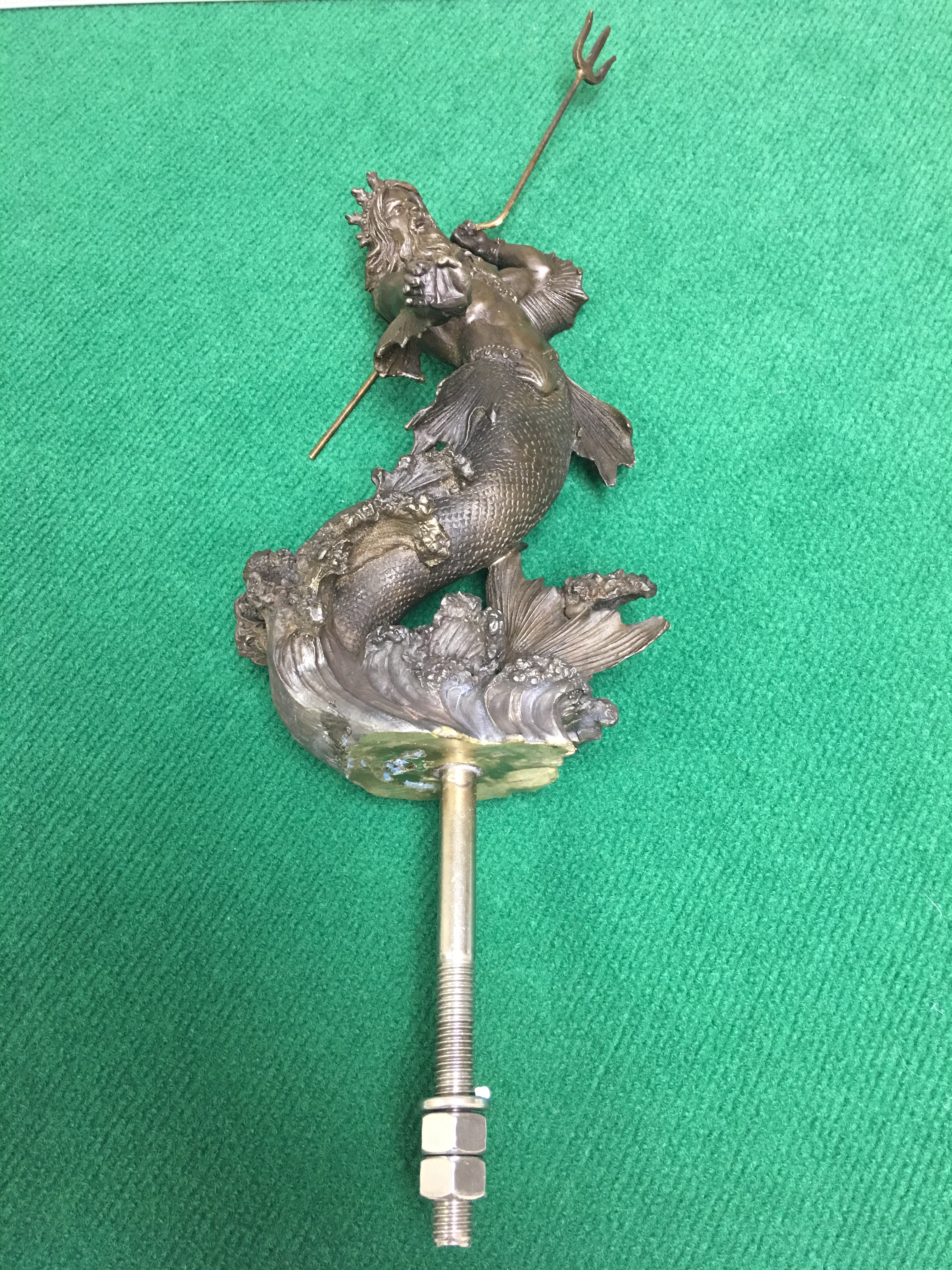
Also, take a look at the flat surface of the bow (front) of the boat just below the bowsprit. As explained to my wife, only for the sole purpose of ensuring a safe passage while at sea I was forced to purchase a bronze sculpture of Poseidon for future installation as part of the bowsprit. I will be posting pictures with updates. So excited, I mean darn!

Sail Number: USA 61207

Entry # 9

As mentioned earlier, last fall I had purchased a set (main & jib) of new North Sails. The sail material and cut were designed specifically with Lake Superior in mind. Originally (and naively), I had planned to just select a sail number of my choosing. However, entry for the 2019 Trans Superior International Yacht Race (TSIYR) requires a US Sailing number. I renewed my US Sail membership and Never Too Late has been assigned sail number USA 61207.